
Australia’s Proposed Modern Slavery Reforms: What You Need to Know
By Maya Zyl
| For the first time, Australian companies could face criminal liability for modern slavery in their supply chains.
In this newsletter, we examine the proposed reforms to Australia’s modern slavery legislation, what they mean for the construction industry, and why the threat of US tariffs has accelerated the push for change. |
On 16th July 2026, the Federal Government announced its intention to strengthen Australia’s modern slavery laws, proposing the introduction of criminal and civil consequences for companies that fail to prevent and report modern slavery in their supply chains. The announcement follows years of criticism that the Modern Slavery Act 2018 (Cth)(the Act), which requires large companies to report on modern slavery risks but imposes no penalties for non-compliance, has failed to produce meaningful change. It also comes in the wake of the United States imposing a 12.5% tariff on many Australian exports over allegations that Australia has not done enough to prevent forced labour in its supply chains.
Summary of Key Proposed Changes
- Criminal liability for $100M+ companies that fail to prevent modern slavery
- A ‘reasonable steps’ defence for companies with genuine due diligence frameworks
- Civil penalties and enforcement powers for non-compliance with existing reporting obligations
- Practical guidance and education initiatives to help companies manage modern slavery risks
What is Modern Slavery?
Modern slavery refers to a range of serious human rights violations in which coercion, threats or deception are used to exploit and deprive people of their freedom. It encompasses trafficking in persons, slavery, servitude, forced marriage, forced labour, debt bondage, child labour, and deceptive recruiting for labour services.
The ‘2022 Global Estimates of Modern Slavery’ estimates that 50 million people globally are living in modern slavery – with construction identified as one of the sectors most affected.
According to the Australian Human Rights Commission and KPMG, an estimated 18% of modern slavery victims are found in the property and construction sector, and at least 22% of forced labour victims are employed in the manufacture of raw materials – including forestry, mining and quarrying – which are key inputs for property and construction.
Modern Slavery in the Australian Construction Industry
The construction sector’s vulnerability is structural. Complex, multi-tiered supply chains, heavy reliance on outsourced and temporary labour, tight delivery deadlines, low margins, and the routine procurement of raw materials from countries with weak human rights protections all create conditions in which exploitation can go undetected.
Migrant workers are particularly vulnerable. Australia’s construction supply chains extend to major hubs in Southeast Asia, the Middle East and Africa, where workers unfamiliar with their rights are easily exploited through visa insecurity, debt bondage, sham contracting and threats of deportation. The Australian Council of Trade Unions has reported that sham contracting practices impact temporary visa holders in the construction and cleaning sectors.
Korean workers in debt bondage have been found on Australian construction sites, hired through layers of contractors and subcontractors, without employment contracts and heavy wage deductions. Illustrating this, one undocumented tiler worked off the books for 12 years without benefits, eventually dying from a work-related respiratory illness after avoiding medical care out of fear and cost.
The Current Law
The Modern Slavery Act 2018 (Cth) requires any entity with an annual consolidated revenue of at least $100 million to publish an annual statement setting out the risk of modern slavery in its operations and supply chains and the actions taken to address them. Statements must be board-approved, signed by a direction, and published on a central government registry.
This regime has significant limitations – and a 2023 Commonwealth statutory review found that the legislation had “not yet caused meaningful change” for those impacted by modern slavery. The most fundamental weakness is that the Act imposes no civil or criminal consequences for failure to comply. A company can fail to report entirely or submit a statement that is generic and disconnected from its actual risk management practices, without facing any legal consequence whatsoever.
The $100 million revenue threshold creates a second critical gap. Labour hire companies are prevalent in the construction industry – the labour hire sector was worth $19 billion in 2023 and consisted of 360,000 employees – yet most labour hire companies fall below the threshold and are not required to report at all. In 2021, the Australian Council on Corporate Responsibility noted that 42% of companies in the S&P/ASX top 100 across the mining, construction and property services sectors failed to disclose information about their labour hire arrangements. The result is a significant and systematic gap in oversight, with companies most associated with labour exploitation largely invisible to the current regulatory regime.
The Proposed Reforms
On 16 July, the Commonwealth Attorney-General’s Department announced proposed reforms to strengthen Australia’s modern slavery laws. The centrepiece reform is the introduction of a new criminal law where companies with an annual consolidated revenue over $100 million “fail to prevent” modern slavery in their supply chains. A defence will be available to a company that can demonstrate it took “reasonable steps” to prevent modern slavery – protecting those with genuine due diligence frameworks while holding to account those that have failed to take meaningful action.
The proposed offence would be only the second “failure to prevent” offence in Australian Commonwealth law and the first to extend this corporate liability model beyond economic crime into human rights and supply chain accountability. Alongside the new offence, the Government also intends to introduce civil penalties and enforcement powers to address non-compliance with the Act’s existing reporting obligations – closing a long-standing gap, given the Act currently carries no consequences for entities that fail to publish a statement or that submit false or misleading information. The reforms will be supported by practical guidance and education initiatives, designed to help companies better identify, manage and remediate supply chain modern slavery risks. While this represents a significant response to the measures contemplated by the 2023 statutory review, it stops well short of the long-demanded threshold reduction to $50 million. In the meantime, the Government will continue to undertake consultation before the offence and enforcement framework are finalised, and further guidance on what constitutes “reasonable steps” is a key issue to watch.
The Role of US Tariffs
The announcement lands against the backdrop of the United States’ permanent 12.5% tariffs on many Australian exports. This follows a months-long investigation by the US Trade Representative which concluded that 60 economies, including Australia, had failed to prevent goods made with forced labour from entering their production processes. The tariffs were announced on 3 July 2026 – just thirteen days before the Government’s modern slavery reform announcement.
While exemptions covering approximately 70% of Australian exports soften the immediate economic blow – including gold, beef, pharmaceuticals and copper – the tariffs represent a direct signal from Australia’s largest trading partner. The Australian Chamber of Commerce and Industry has described the tariff as “ludicrous,” noting it conflicts with the Australia-United States Free Trade Agreement signed in 2005. However, the underlying dynamic is clear: Australia’s modern slavery framework has now attracted international trade consequences, and the proposed reforms constitute a direct response to that pressure.
How Crisp Law Can Help
Crisp Law is well-placed to support you in preparing for and navigating these proposed reforms. If you want to understand your growing obligations under these upcoming reforms, or discuss their implications for your business or projects, please reach out to the Crisp Law team.
References
Modern Slavery Act 2018 (Cth)
Building Legislation Amendment (Fairer Payments on Jobsites and Other Matters) Act 2025
Australian Human Rights Commission and KPMG, Modern Slavery in the Property and Construction Sector (2020)
Human Rights Law Centre, Modern Slavery Overhaul (2026) <https://www.hrlc.org.au/news/modern-slavery-overhaul/>
Attorney-General’s Department, Albanese Government Combatting Modern Slavery (16 July 2026)
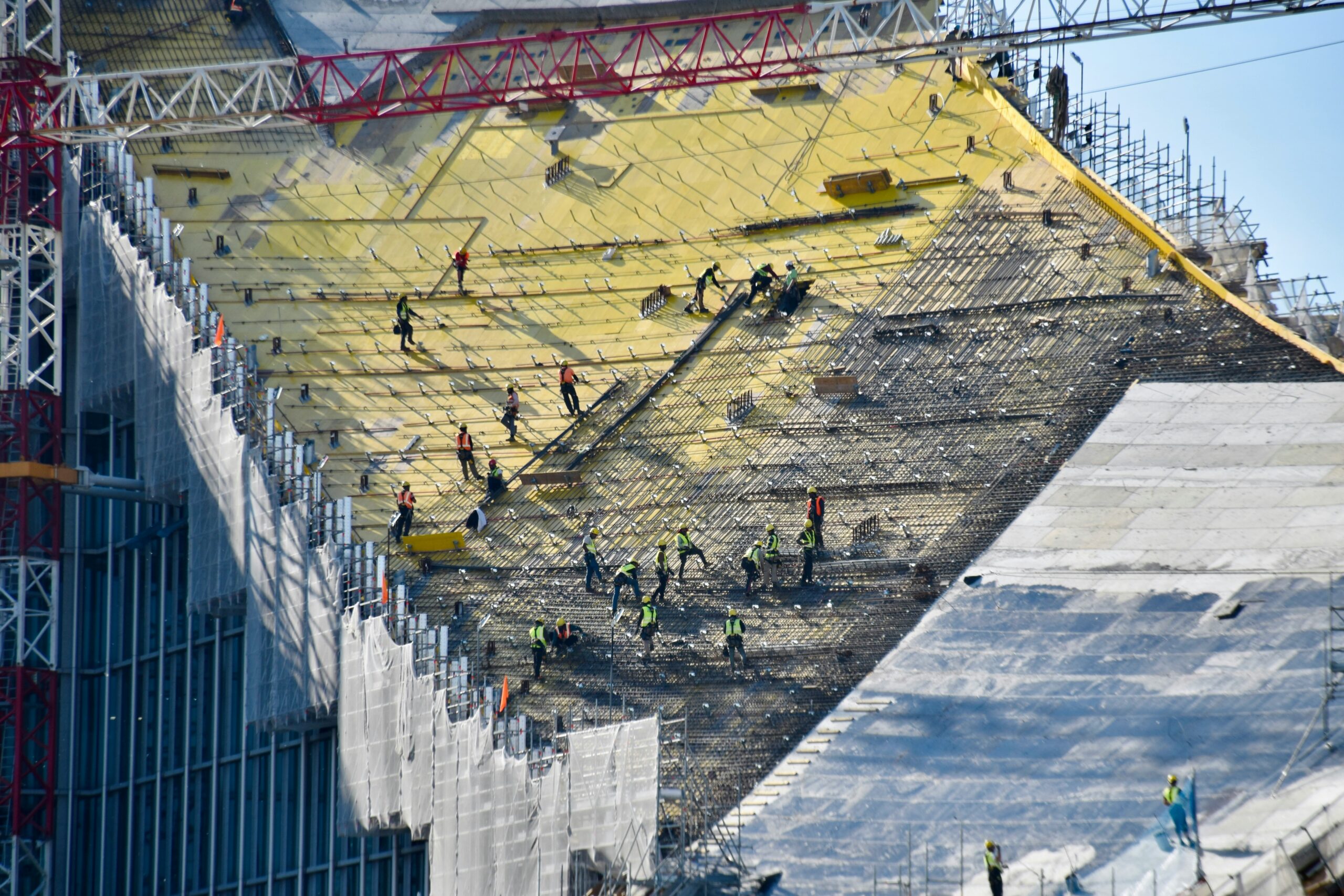
Photo by Arno Senoner on UnSplash
